

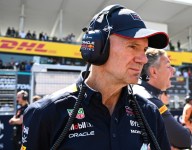
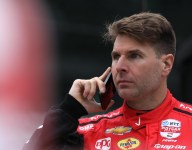
 IndyCar President of Competition Derrick Walker (LEFT) was at Daytona for last month’s opening round of the TUDOR United SportsCar Championship event, but he wasn’t there to oversee his Falken Tire-sponsored sports car team. IndyCar’s racing boss used the visit to meet with officials from IMSA, comparing notes on how both sanctioning bodies go about the business of running their respective racing series.
Walker, who took the IndyCar post after the Indy 500 last May, has brought an open-minded approach to his role, making the meeting with IMSA and the surging TUDOR Championship the latest in a series of smart moves.
“I was there as much if not more for IndyCar to look at how they do things,” he told RACER. “We have a lot in common on how we do things with a lot of other sanctioning bodies, so it was a chance to look at how they’re merging the two series, how they’re handling the rules and regulations, and it was also good to see the issue they had at the end of the race wasn’t unique to us, or them, for that matter.”
Rather than take a swipe at IMSA for the controversial penalty at the end of the Rolex 24 that handed the GT Daytona class win to the second-place car before reversing that decision hours later, Walker found common ground with the hurdles faced by those who work in race control.
“It isn’t like football where you freeze the game and go to instant replay and decide whether there was a penalty or not; you have to make very tough calls in real time, and both of our organizations can benefit from talking about such things to see how we can do things better when we face them independently,” he added.
“We’re looking to minimize that kind of risk when those things happen during our races, so it was good to get a look inside how they operate and to find we both see many of the same issues that need to be addressed. Simply sitting down with them and talking through some of those issues and sharing ideas on how we can do things better was very helpful and we’ll keep the lines open for more dialogue in the future.”
Although the information sharing is an informal process at this point, Walker expects to continue developing the collegial atmosphere between America’s top open-wheel and sports car series. IndyCar and the TUDOR Championship only share two events this year at Long Beach and Detroit, but hopefully the efforts between both camps – at least on the competition side – will draw the two series closer together.
“In today’s world, you’d be crazy not to,” Walker continued. “We may have different cars, but ultimately, the end goal is the same. And certainly our friends at NASCAR, the ALMS, Grand-Am; they’ve always been good friends to IndyCar. From an officiating point, we’ve had a good relationship with all three, and with them under one roof now, it’s more of a continuation of the relationship than anything else. There’s a lot more to come there. I recognize that value. And they’re interested in what we’re doing and how we’re solving our problems.
“In racing, we’ve all got the same problem: how do we make it work from a competitive standpoint, how to make it an entertaining series to watch and how do we balance the costs? We’re all dealing with the same major issues, it doesn’t matter what shape the car is. It’s the same problem. Everybody looks at it and some come at it a different way, and we learn different aspects of it and the value in how people and what people have learned and how to apply what they’ve learned to what you do and vice versa. From an IndyCar perspective, we’re all about working together and open-door communication with all the series. There’s more value in that than anything else when it comes to how we grow better racing all around for everybody.”



Comments